Monday, September 17, 2012

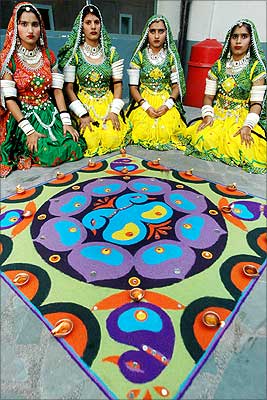
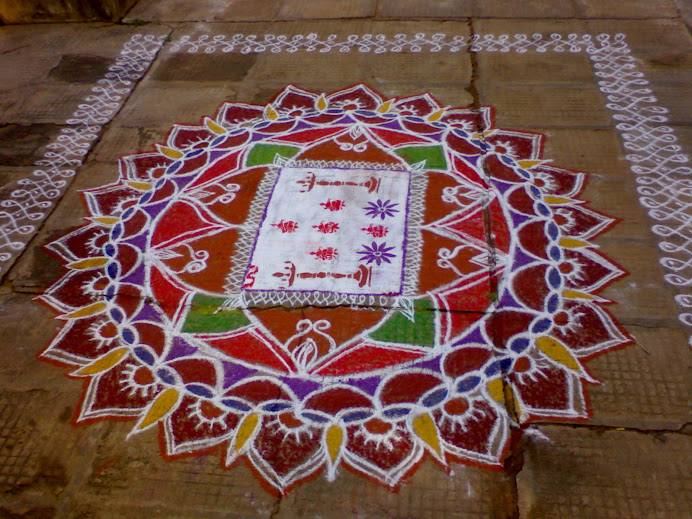
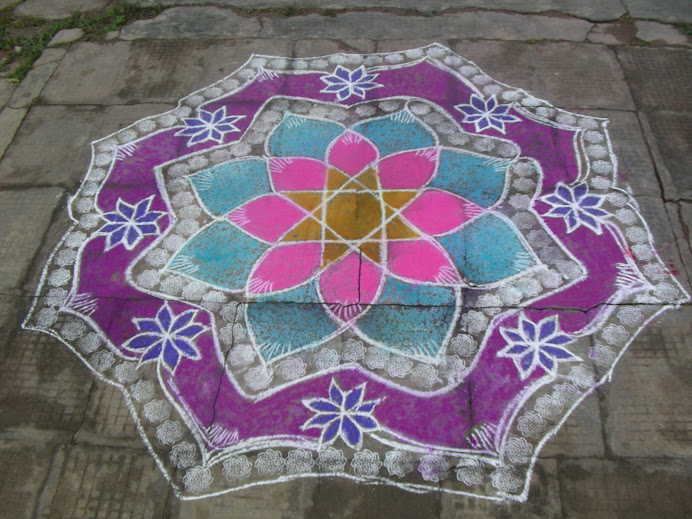
We present to you the Colors of India - Rangoli. Beautiful decorations with amazing colors & designs created in front of houses during Sankranti. And this year, it comes on 15th January 2008. Rangoli can be seen on this day in front of many houses in India.

Colors Of India - Rangoli (23) 1
Sankranti is a national festival in India. It signifies the beginning of the harvest season for the farmers of India. The Tamil version is called Pongal & the Northern states call it Makar Sankranti. Here are regional variations just in case if you are interested to see.

Colors Of India - Rangoli (23) 2Rangoli ingredients for sale.

Colors Of India - Rangoli (23) 3

Rangoli:
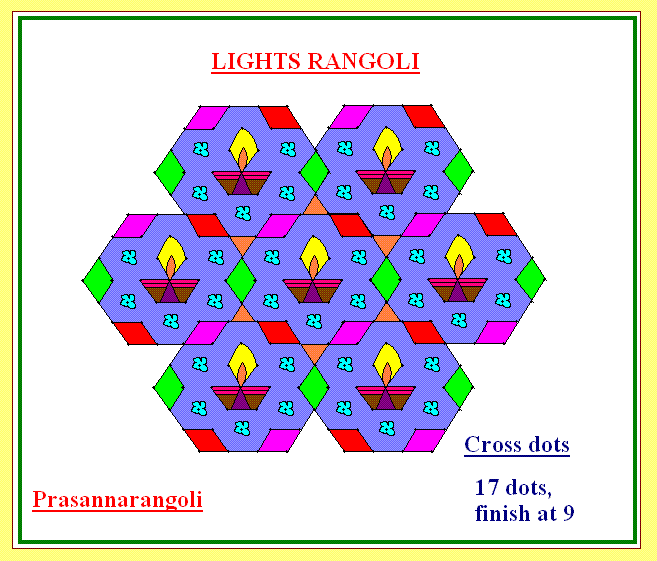
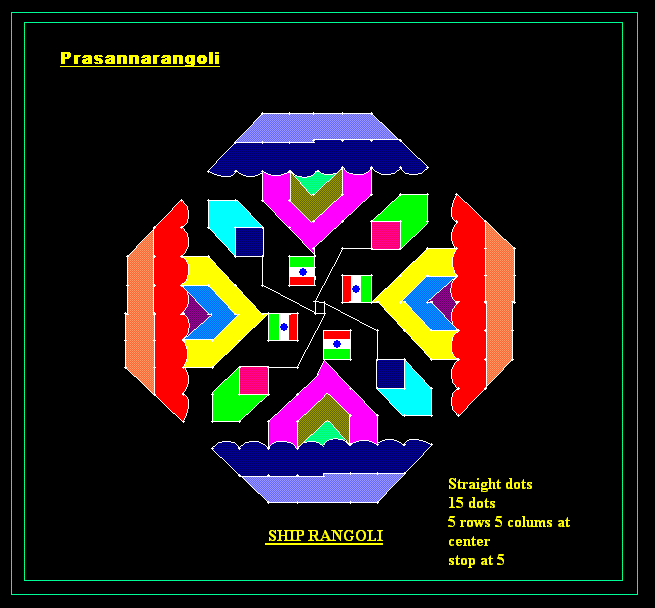
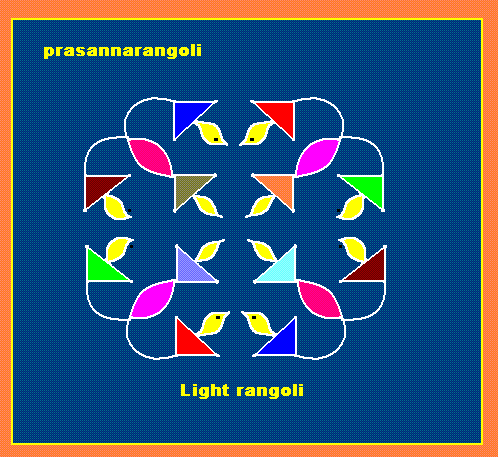
Rangoli is one of the most popular art forms in India. It is a form of sandpainting decoration that uses finely ground white powder and colors, and is used commonly outside homes in India.
Rangoli can be wall art as well as floor art.
Colors Of India - Rangoli (23) 4

Colors Of India - Rangoli (23) 5

Colors Of India - Rangoli (23) 6
Colors Of India - Rangoli (23) 7

Colors Of India - Rangoli (23) 8

Kolam, the Tamil version of Rangoli.

Colors Of India - Rangoli (23) 9
Kolam is a decorative design drawn in a variety of sandpaintings using rice powder by female members of the family in front of their homes, especially near the threshold. It is widely practiced by Hindus in South India. They are generally symmetric. Kolams are thought to bestow prosperity to the homes. For special occasions limestone and red brick powder to contrast are also used. Modern interpretations have accommodated chalk, and the latest "technology" in kolams is actually vinyl stickers.
Colors Of India - Rangoli (23) 10

Colors Of India - Rangoli (23) 11

Colors Of India - Rangoli (23) 12

Colors Of India - Rangoli (23) 13
Rangavalli is an Indian pattern based on mathematical grid structures, used to make a form of sandpainting.
Colors Of India - Rangoli (23) 14

Colors Of India - Rangoli (23) 15

Colors Of India - Rangoli (23) 16

Colors Of India - Rangoli (23) 17Rangoli made with petals.

Colors Of India - Rangoli (23) 18

Colors Of India - Rangoli (23) 19

Colors Of India - Rangoli (23) 20

Colors Of India - Rangoli (23) 21
Colors Of India - Rangoli (23) 22
Colors Of India - Rangoli (23) 23
Kolam plate designs
 Most of these are to be used only in front of the altar or the puja room because these designs have religious symbols in them which shouldn't be stepped upon. So the ones below too..
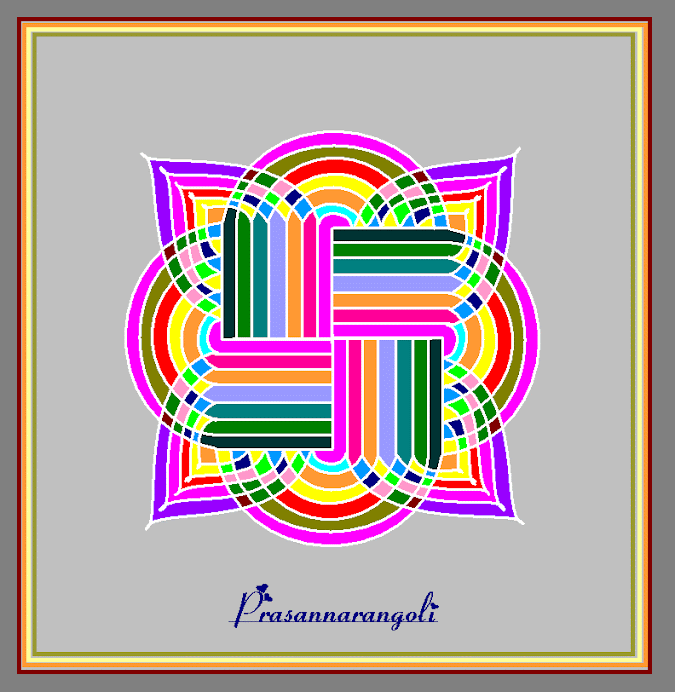
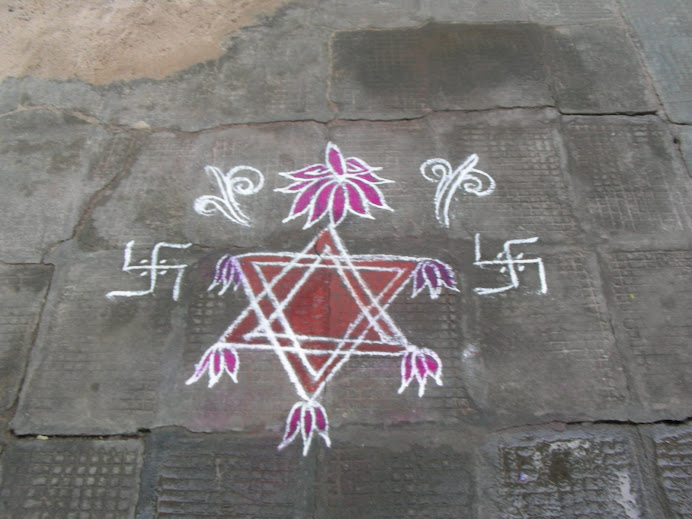
These types of kolams are called 'Hrudhyakamalam' and should not be put in the front of the house. Are so are the Swasthikas. 'Swastika' is Lord Ganesh himself so that should not be drawn where people step on it

and not many people know about it and so are the simple 'Star kolams'.
They are the symbols of Lord Muruga or Lord Shanmukha. The 3rd kolam on the right is okay to draw in the front.
Here is a you tube link to the sacred Chakra kolams which are drawn before big yagnas and poojas like 'Baghavath sevai' , Ganapathi homams' especially in Kerala and Karnataka  http://www.youtube.com/watch?v=uYC0hwVpG2o

Kolams/Rangoli


Kolam or Rangolis are an integral party of Indian culture. In Tamil nadu its called 'Kolam', in Kerala its called 'Poovidai or 'Pookalam', which is usually put during Onam season which is done by outlining with rice flour and filling it intricate designs with flowers and leaves.  In Andhra Pradesh its called 'Muthu', In Karnataka 'Rangoli',  In 'Maharastra', its called 'Ranga valli', in 'Gujarath its called 'Sandhya', in 'Rajasthan', its called 'Manndana', in 'Uttar Pradesh' its called 'Sona Rangana', in 'West Bengal' its called 'Alpana'. 


Pulli kolam or Suzhi kolam

The above kolams are simple ones. Yyou also have really elaborate big Suzhi kolams like the ones below. This type of kolams need amazing precision, calculations and ofcourse a steady hand.
Complex Suzhi kolams and Dot kolams

South Indian rangolis


Kerala Pookolams

Pookalam is an intricate and colourful arrangement of flowers laid on the floor. Tradition of decorating Pookalam is extremely popular in Kerala and is followed as a ritual in every household during ten-day-long Onam celebrations.

'Pookhalam' consists of two words, 'poov' meaning flower and 'kalam' means colour sketches on the ground. It is considered auspicious to prepare Pookalam, also known as 'Aththa-Poo' during the festival of Onam.

People believe the spirit of their dear King Mahabali visits Kerala at the time of Onam. Besides making several other arrangements, people, especially adolescent girls prepare elaborate Pookalams to welcome their most loved King.

Kilo and kilos of flowers, lot of dedication, creativity, technique and team effort are the basic essential of an eye catching Pookkalam.

Athapoovu are usually circular in shape and multi-tiered colourful arrangements of flowers, petals and leaves. Use of powder colours, desiccated coconut or artificial flowers is prohibited. Pookalams are normally laid on the front court yard of the house. Idols of Mahabali and Vishnu are placed in the center of the Pookalam and worshiped. Diameter of a Pookalam normally ranges from four to five meters.

PookalamRitual of making the flower mats continues for all ten days of Onam. Designing starts from the day of Atham and is made ready by Thiruvonam day. Basic design is prepared on the first day. Size of a Pookalam is increased by adding more to it on every passing day hence a massive Pookalam gets ready for the main day of the occasion. Its a big creative task, as designers have to think of a new design ever day.

Various flowers are used on each day as a specific flower is dedicated to each day of Onam. Commonly used flowers include Thumba (Lucas Aspera), Kakka Poovu, Thechipoovu, Mukkutti (little tree plant), Chemparathy (shoe flower), Aripoo or Konginipoo (Lantana), Hanuman Kireedom (Red pagoda plant) and Chethi (Ixora). Of all these flowers, Thumba flowers are given more importance in Pookalam as they are small in size and glitter in the the soft rays of the sun. 'Thumba Poo' is also considered to be the favourite flower of Lord Shiva and King Mahabali was a devout worshipper of Shiva.

On the next day of Onam, Thumba flowers are used to decorate Onapookalam. The arrangement is not touched for the next 15 days. On the 15 th day, called 'Ayilyam', Pookalam is decorated again. On the next day, called Magam, Pookalam is given a cut in its four corners with a knife. This marks the end of Pookalam decorations for the year. Some also follow the tradition of erecting a small pandal over the completed flower carpet and decorating it with colourful festoons.

Making of Pookalam is itself a colourful and joyous event. Being a team effort it helps to generate feeling of togetherness and goodwill amongst the people. It is animating to watch women as they prepare Pookalam while singing traditional songs. Giggling and sharing jokes between the thought provoking and back breaking job.

PookalamTrends
Earlier, people used to make efforts to collect flowers for designing a Pookalam. Children used to get up early in the morning and gather flowers in their small 'Pookuda' (basket) from the village gardens. These days, the trend has changed and people have the option of buying flowers from the market in the shape and colour of their choice.

Pookalam decoration competitions are organised by various societies and groups all over the state on the day of Onam. They have become extremely popular and witness huge public participations. Big prizes are also kept in these contests as they have turned up to be extremely competitive events. A large number of people assemble just to have a look at the innovative and meticulously prepared art pieces.
Click the link below for viewing more designs:
http://www.hindu-blog.com/2007/08/onam-pookalam-photos-of-floral-designs.html


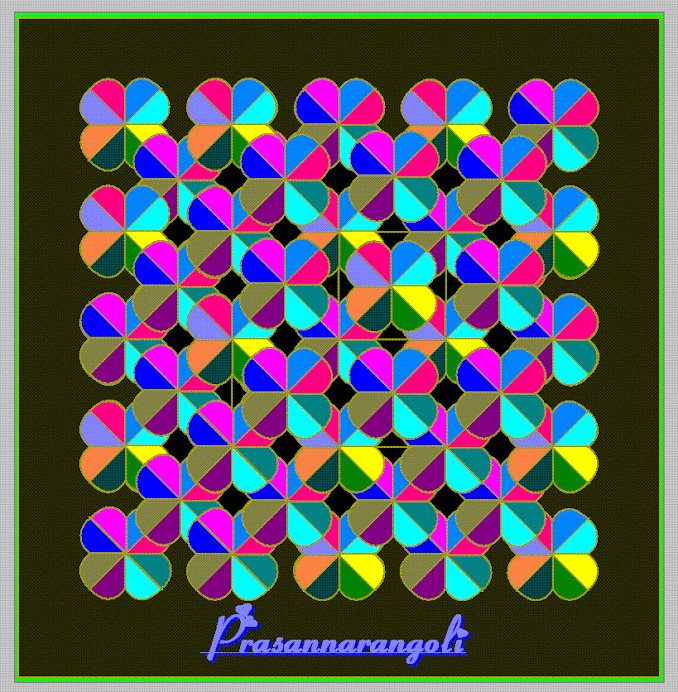
A beautiful design, though it is said, is created in the heart, use of technology is also in vogue in designing of a Pookalam. People prepare design first on computer and then implement it on floor. This saves a lot of time and energy and helps the designers to come up with stunning Pookalams.
Rajasthani Mandana
Outside the walls of Rajasthani village homes, the Mandana tradition of painting is practiced by the women of the Meena tribe. Handed down from mother to daughter, this stunning public art is a community tradition, done by women on the mud walls and floors of their homes, keeping time with recurring festivals and the changing seasons.
It can be explained as a form of story telling through illustration.

Sunday, September 16, 2012


Rangoli -- an auspicious symbol

Traditionally, rangoli was done in small patterns on a small part of the floor; now, entire floor areas of rooms and even big grounds are covered in intricate detailed designs. It is also one of the first welcome signs you will see on occasions like weddings, festivals and opening ceremonies as rangolis are considered as auspicious symbol.


In ancient times, intricately created colourful patterns would decorate the entrance of each home. These patterns, known as rangolis, would be made anew each day with white and coloured powders, by the ladies of the house.
Today, you no longer see elaborate rangolis outside most homes, particularly in urban areas. Those that have it prefer the readymade 'sticker' versions. But, come Diwali, the festival of lights, and women once again create beautiful rangolis outside their homes.
Rangoli is a folk art, where designs are created on the floor. The origin of this art can be traced to the Puranas (works on Hindu mythology). Rangoli is a Sanskrit word and refers to the creative expression of art through the use of colour.

Image: Padma, 18, completes a rangoli (powder colour decoration) to celebrate the Hindu festival of Diwali (festival of lights) at her home in Bangalore (Diwali 2001). Hindus decorate their houses with rangolis and light oil lamps and candles to celebrate Diwali. Rangolis, symbolising peace and harmony are prepared by almost every Hindu household to usher in the blessings of God on a festive occasion.


Traditional motifs from nature

Creating rangolis are part of the Diwali celebration. During this time, markets will be flooded with colourful mini-mountains of powder, and ready-to-use stamps, moulds and other aids, for those whose fingers are no longer nimble. These colourful rangolis usually use traditional motifs taken from Nature -- peacocks, swans, mango, flowers, geometrical designs, etc. In ancient times, the colours were derived from natural dyes. Today, powdered colours are sprinkled on floors to form these decorative designs.
Rangolis can be vivid, three-dimensional art complete with shadings or they can be the traditional, plain, yet beautiful, two-dimensional designs.
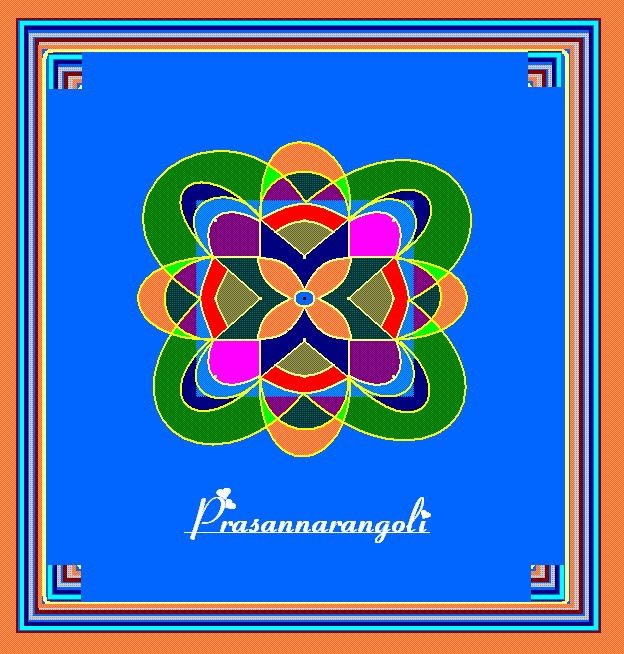
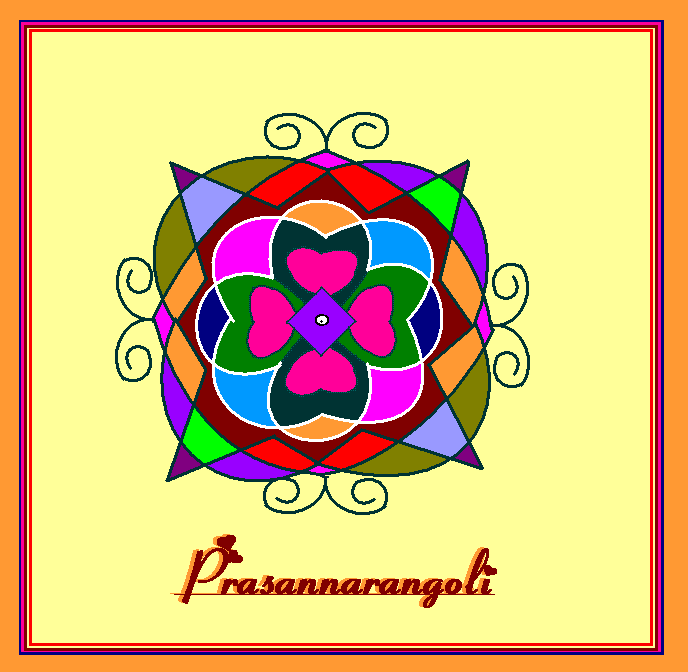
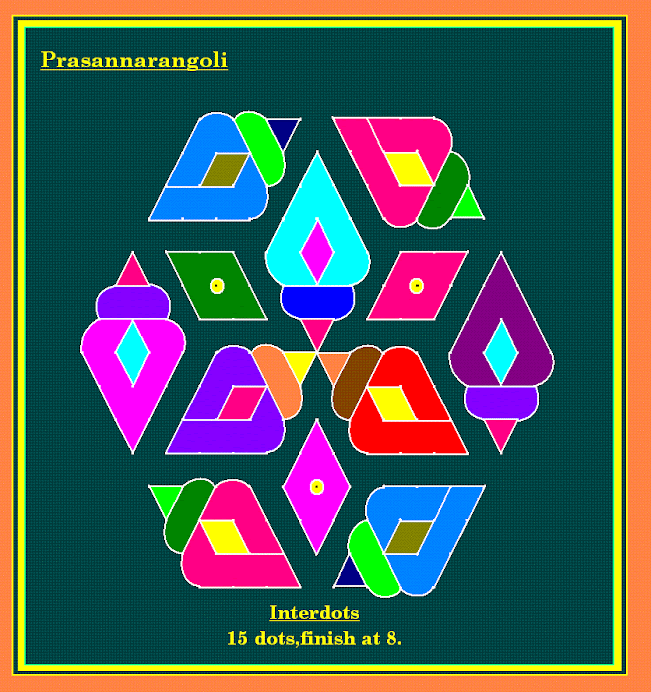
The designs are symbolic and often geometrical patterns, with lines, dots, squares, circles, triangles. It is important is that the entire pattern must be an unbroken line, with no gaps left anywhere for evil spirits to enter.

Image: A Pakistani Hindu woman and child wave sparklers in Karachi during celebrations of the Hindu Festival of Diwali (2005). The festival marks the home coming of the Hindu God, Lord Rama after killing the evil King Ravana, symbolising the victory of good over evil and leading the people from darkness to light.


A rangoli is an expression of warm hospitality to the guests coming home. The art of rangoli has not just survived but flourished in India. It transmits the joyous spirit of festivals and celebration in the country.

Image: A Pakistani Hindu family celebrates the popular Hindu festival, Diwali, the 'festival of lights' in Karachi (2006). People decorate their homes with flowers and diyas (earthen lamps) during Diwali, which celebrates the homecoming of the god Lord Ram after vanquishing the demon-king Ravana, and also honors the goddess of wealth, Lakshmi.